Category Menu
Salinger
Catcher
Stories
Glass Series
Salinger Says
“I'm aware that many of my friends will be saddened and shocked, or shocked-saddened, over some of the chapters in The Catcher in the Rye. Some of my best friends are children. In fact, all my best friends are children. It's almost unbearable for me to realize that my book will be kept on a shelf out of their reach.”
-1951
About Dead Caulfields
Dead Caulfields was established in 2004 as an online resource focused on the life and works of J.D. Salinger. The site's exploration covers not only Salinger's classic novel The Catcher in the Rye, but also the author's lesser-known writings, published and unpublished ...
Contact
The Catcher in the Rye

An Overview
The Catcher in the Rye
Introduction to an American classic
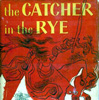
Published to acclaim in 1951, The Catcher in the Rye is by far the most renown of J.D. Salinger's works. Its release both infuriated and elated the public and critics alike. Salinger's only complete novel, it has become one of the great classics of post-war American Literature. Remaining a best-seller since its publication and selling over 65 million copies, The Catcher in the Rye has commanded the affection of each generation of readers for more than half of a century. The novel's impact is ongoing. Innovative for its time and characterizing an era in American history, it continues to influence the way in which society defines itself as a result of its enduring popularity and force of impact. The novel's narrator and main character, Holden Caulfield, has become an American icon. More of a living force than a fictional character, present-day readers find a rare affinity with him now as much as they did when the novel was first published. The intense emotional chord which Holden strikes in readers is testimony to the power of the author to draw the reader to a place of intimate self-examination.
A first-person narrative by Holden Caulfield, or rather, a dialogue between Holden and the reader, this novel is unique in literature by the apparent absence of the author. Salinger's authorship is not an exercise in control in Catcher, but an exercise in presentation. The result is an intimacy between the main character and the reader (as they participate in the story) which is rare in literature. Rare too, is the mechanism by which the narration, rather than explaining the plot, becomes the plot itself. The weaving together of these unusual literary tactics gift the reader with the rare position of actually being a major character of the book, making its reading an intensely personal experience.
Because The Catcher in the Rye has been adopted by so many American school cirriculums, most readers first experience the novel when they are young. Perhaps because the character of Holden Calufield is himself an adolescent in the book, its impact is especially profound at an early age. As a result, the reading of The Catcher in the Rye often lingers on as one of the more pleasant memories of youth and the bond which is formed between the reader and Holden's character often survives the years. Consequently, if one re-reads Catcher at a later stage of life they not only re-establish that bond with an old friend, but often re-establish a bond with their younger selves.
But the joy of Catcher goes beyond this. In re-reading The Catcher in the Rye , one often discovers a Holden Caulfield who has also altered with the years. This is a novel which constantly molds itself to the reader. It is a literary fishes and loaves. Just as familiarity with Holden's character does not diminish his complexity, or familiarity with ourselves does not diminish our own mystery, the gift of self-discovery that this novel offers is not diminished by time.
More Catcher Sections:
Characters
 Catcher in the Rye Characters introduced by Chapter & page number.

        A great resource for those pesky school assignments or simply to find a character or event in the book.
Chronology
Follow Holden during his three day journey from Agerstown, Pennsylvania to the Central Park carousel in New York City through a step-by-step chronology of The Catcher in the Rye.
Comin' thro' the Rye
|
 |